💡 The Mixer, My Grandfather, and the Looming Crisis of Unfixable Electronics
My weekend project—a powered mixer for a friend—was a powerful, hands-on lesson in the changing nature of electronics and the fight for the Right to Repair.
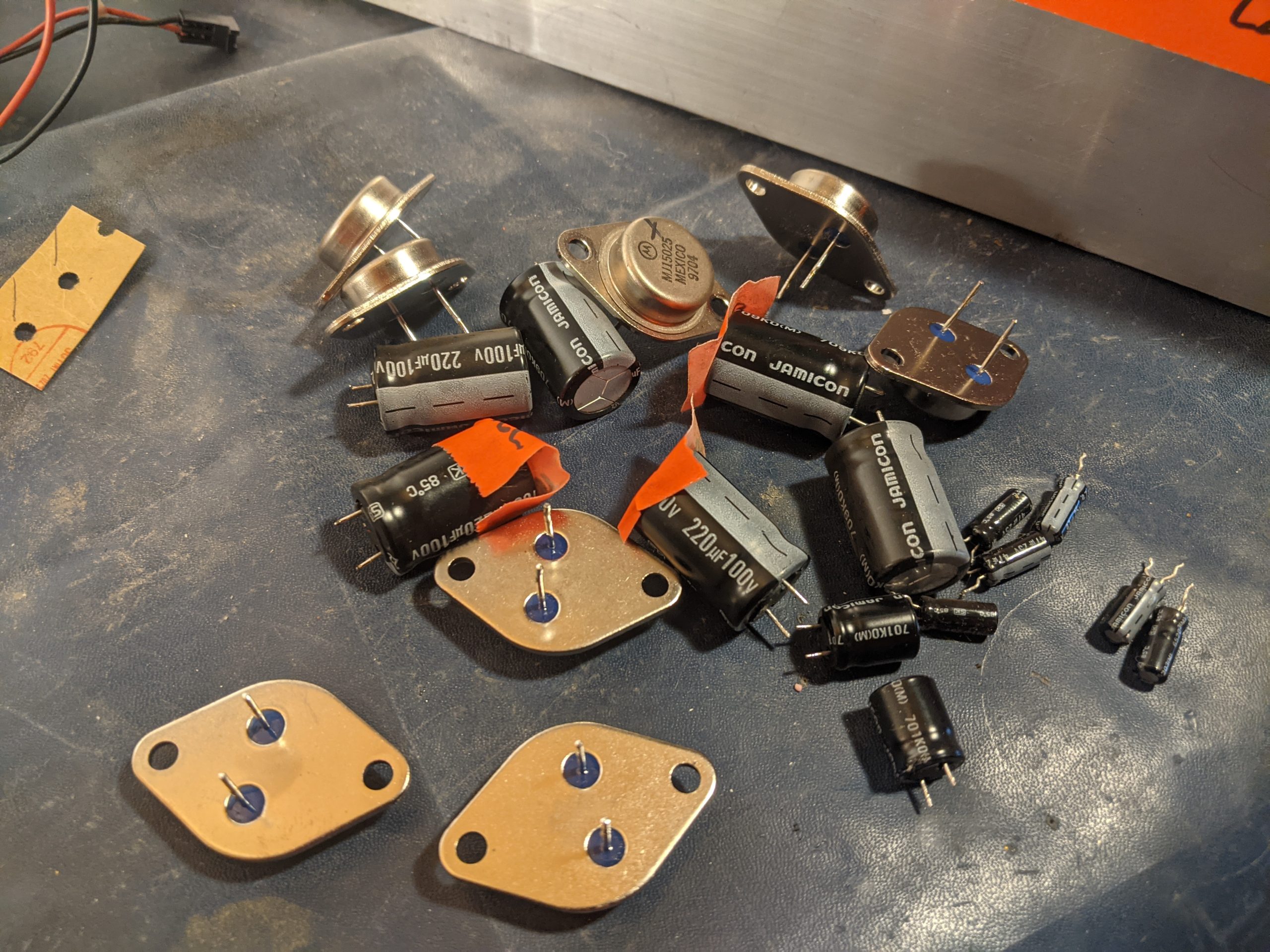
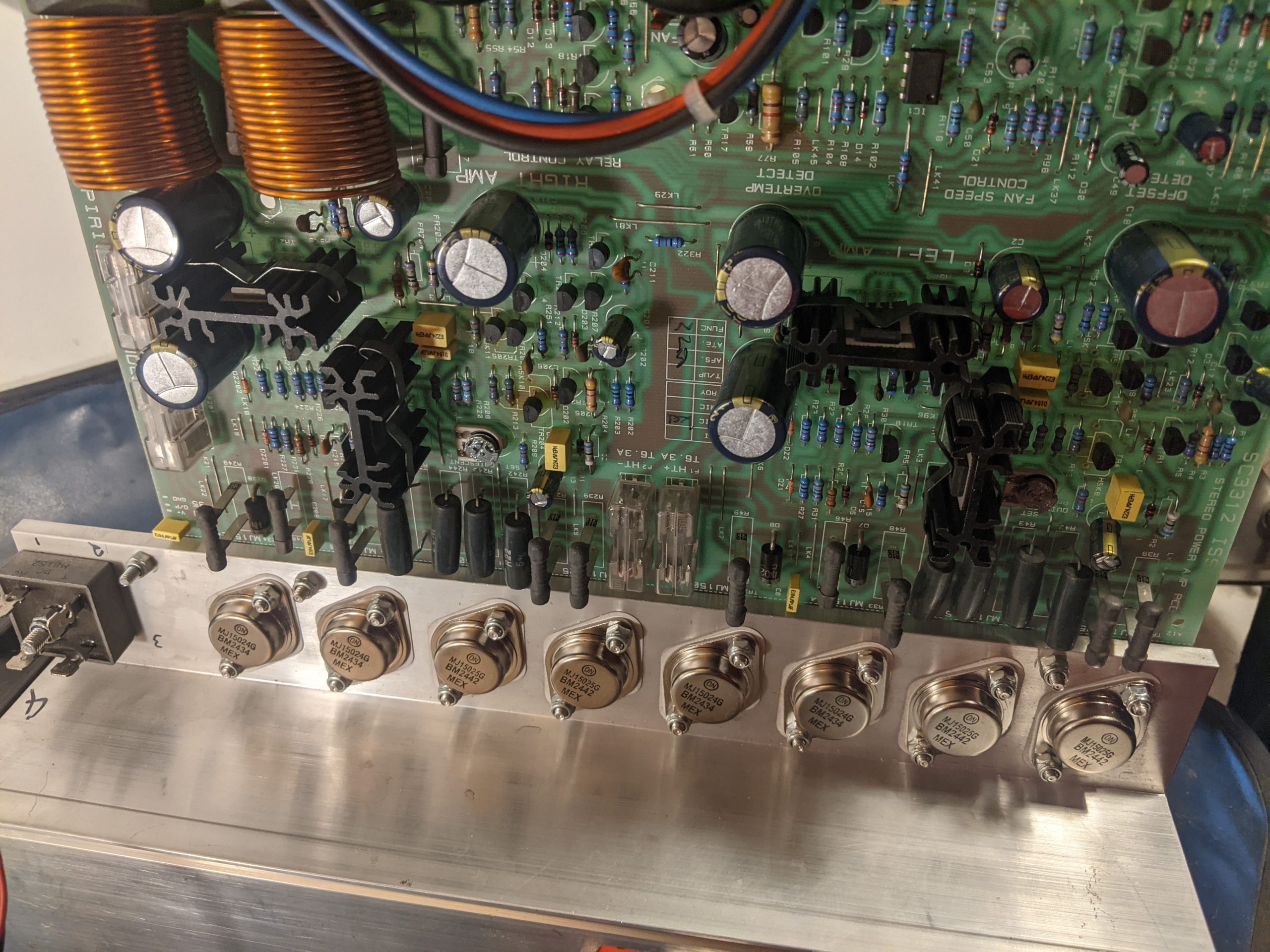
For a friend, I made an exception to my usual “no bench work” rule. The diagnosis was classic: a blown channel, likely from speakers incorrectly wired in parallel. Instead of a minimal patch job, I opted for a full refurbishment, the way I was taught: new, high-quality Panasonic FC caps and fresh, matched transistors. A labour of love, not profit. Continue reading →
Beyond the “Lowest Common Denominator”: Why Audio Interoperability Thrives on the Most Common Commonality
In the complex symphony of modern technology, where devices from countless manufacturers strive to communicate, audio interoperability stands as a crucial pillar. From our headphones and smartphones to professional recording studios and live event setups, the ability for sound to flow seamlessly between disparate systems is not just convenient – it’s essential. While the concept of a “lowest common denominator” might seem like a pragmatic approach to achieving universal compatibility, in the world of audio interoperability, it is the pursuit of the “most common commonality” that truly unlocks value and drives innovation. Continue reading →
The Protocol-Driven Stage: Why SDP Changes Everything for Live Sound
For decades, the foundation of a successful live show has been the patch master—a highly skilled human who translates a band’s technical needs (their stage plot and input list) into physical cables. The Festival Patch formalized this by making the mixing console channels static, minimizing changeover time by relying on human speed and organizational charts.
But what happens when the patch list becomes part of the digital DNA of the audio system?
The demonstration of embedding specific equipment metadata—like the microphone model ($\text{SM57}$), phantom power ($\text{P48}$), and gain settings—directly into the same protocol (SDP) that defines the stream count and routing, paves the way for the Automated Stage. Continue reading →
Empowering the User: The Boeing vs. Airbus Philosophy in Software and Control System Design
In the world of aviation, the stark philosophical differences between Boeing and Airbus control systems offer a profound case study for user experience (UX) design in software and control systems. It’s a debate between tools that empower the user with ultimate control and intelligent assistance versus those that abstract away complexity and enforce protective boundaries. This fundamental tension – enabling vs. doing – is critical for any designer aiming to create intuitive, effective, and ultimately trusted systems.
The Core Dichotomy: Enablement vs. Automation
At the heart of the aviation analogy is the distinction between systems designed to enable a highly skilled user to perform their task with enhanced precision and safety, and systems designed to automate tasks, protecting the user from potential errors even if it means ceding some control.
Airbus: The “Doing It For You” Approach
Imagine a powerful, intelligent assistant that anticipates your needs and proactively prevents you from making mistakes. This is the essence of the Airbus philosophy, particularly in its “Normal Law” flight controls.
The Experience: The pilot provides high-level commands via a side-stick, and the computer translates these into safe, optimized control surface movements, continuously auto-trimming the aircraft.
The UX Takeaway:
Pros: Reduces workload, enforces safety limits, creates a consistent and predictable experience across the fleet, and can be highly efficient in routine operations. For novice users or high-stress environments, this can significantly lower the barrier to entry and reduce the cognitive load.
Cons: Can lead to a feeling of disconnect from the underlying mechanics. When something unexpected happens, the user might struggle to understand why the system is behaving a certain way or how to override its protective actions. The “unlinked” side-sticks can also create ambiguity in multi-user scenarios.
Software Analogy: Think of an advanced AI writing assistant that not only corrects grammar but also rewrites sentences for clarity, ensures brand voice consistency, and prevents you from using problematic phrases – even if you intended to use them for a specific effect. It’s safe, but less expressive. Or a “smart home” system that overrides your thermostat settings based on learned patterns, even when you want something different.
Boeing: The “Enabling You to Do It” Approach
Now, consider a sophisticated set of tools that amplify your skills, provide real-time feedback, and error-check your inputs, but always leave the final decision and physical control in your hands. This mirrors the Boeing philosophy.
The Experience: Pilots manipulate a traditional, linked yoke. While fly-by-wire technology filters and optimizes inputs, the system generally expects the pilot to manage trim and provides “soft limits” that can be overridden with sufficient force. The system assists, but the pilot remains the ultimate authority.
The UX Takeaway:
Pros: Fosters a sense of control and mastery, provides direct feedback through linked controls, allows for intuitive overrides in emergencies, and maintains the mental model of direct interaction. For expert users, this can lead to greater flexibility and a deeper understanding of the system’s behavior.
Cons: Can have a steeper learning curve, requires more active pilot management (e.g., trimming), and places a greater burden of responsibility on the user to stay within safe operating limits.
Software Analogy: This is like a professional photo editing suite where you have granular control over every aspect of an image. The software offers powerful filters and intelligent adjustments, but you’re always the one making the brush strokes, adjusting sliders, and approving changes. Or a sophisticated IDE (Integrated Development Environment) for a programmer: it offers powerful auto-completion, syntax highlighting, and debugging tools, but doesn’t write the code for you or prevent you from making a logical error, allowing you to innovate.
Designing for Trust: Error Checking Without Taking Over
The crucial design principle emerging from this comparison is the need for systems that provide robust error checking and intelligent assistance while preserving the user’s ultimate agency. The goal should be to create “smart tools,” not “autonomous overlords.”
Key Design Principles for Empowerment:
Transparency and Feedback: Users need to understand what the system is doing and why. Linked yokes provide immediate physical feedback. In software, this translates to clear status indicators, activity logs, and explanations for automated actions. If an AI suggests a change, explain its reasoning.
Soft Limits, Not Hard Gates: While safety is paramount, consider whether a protective measure should be an absolute barrier or a strong suggestion that can be bypassed in exceptional circumstances. Boeing’s “soft limits” allow pilots to exert authority when necessary. In software, this might mean warning messages instead of outright prevention, or giving the user an “override” option with appropriate warnings.
Configurability and Customization: Allow users to adjust the level of automation and assistance. Some users prefer more guidance, others more control. Provide options to switch between different “control laws” or modes that align with their skill level and current task.
Preserve Mental Models: Whenever possible, build upon existing mental models. Boeing’s yoke retains a traditional feel. In software, this means using familiar metaphors, consistent UI patterns, and avoiding overly abstract interfaces that require relearning fundamental interactions.
Enable, Don’t Replace: The most powerful tools don’t do the job for the user; they enable the user to do the job better, faster, and more safely. They act as extensions of the user’s capabilities, not substitutes.
The Future of UX: A Hybrid Approach
Ultimately, neither pure “Airbus” nor pure “Boeing” is universally superior. The ideal UX often lies in a hybrid approach, intelligently blending the strengths of both philosophies. For routine tasks, automation and protective limits are incredibly valuable. But when the unexpected happens, or when creativity and nuanced judgment are required, the system must gracefully step back and empower the human creator.
Designers must constantly ask: “Is this tool serving the user’s intent, or is it dictating it?” By prioritizing transparency, configurable assistance, and the user’s ultimate authority, we can build software and control systems that earn trust, foster mastery, and truly empower those who use them.
As we explore the frontier of quantum computing, we’re not just grappling with abstract concepts like superposition and entanglement—we’re engineering systems that manipulate light, matter, and energy at their most fundamental levels. In many ways, this feels like a return to analog principles, where computation is continuous rather than discrete.
I love interesting weird audio problems—the stranger the better! When a colleague reached out with a baffling issue of severe signal loading on their freshly built instrument cables, I knew it was right up my alley. It involved high-quality components behaving badly, and it was a great reminder that even experts can overlook a small but critical detail buried in the cable specifications. Continue reading →
How Listening Is the Story: Why Audio Paints the Truest Picture
By Anthony Kuzub
In an age dominated by high-definition screens and viral video, it’s easy to believe that seeing is believing, and that the richest experiences are those delivered through our eyes. But what if the deepest, most personal narratives aren’t found in pixels, but in vibrations? What if, in fact, listening is the story, and the pictures we perceive are often secondary, mere echoes of the sound that truly brings a narrative to life? As it turns out, there’s always more to imagine when you listen.
For centuries, before the advent of the printing press, let alone cinema, stories were primarily heard. They were sung, chanted, whispered, and declaimed around campfires and in great halls. The power of these tales resided not in their visual depiction, but in the narrator’s voice, the cadence of the language, and the vibrant tapestry of sound effects conjured by the imagination. Our brains are wired for this primal form of storytelling, acting as a personal, infinitely adaptable cinema for the mind, always ready to fill in the magnificent gaps.
The Brain: Your Personal IMAX – And Director
When you listen, particularly to an audiobook, a podcast, or a radio play, your brain shifts from passive consumption to active co-creation. The storyteller provides the blueprint: the dialogue, the ambient sounds, the pace, and the tone. Your imagination, in turn, becomes the ultimate set designer, costume department, and casting director. The rustle of leaves described by a narrator becomes your forest, filled with your specific species of trees and the quality of light you envision. A character’s voice sculpts their face, their posture, their very presence in a way no director’s camera could ever universally achieve. This is where the “more to imagine” truly comes alive.
This isn’t a deficiency; it’s a superpower. The pictures generated by your mind are infinitely more personal, detailed, and emotionally resonant than any external image. They are tailored to your unique experiences, memories, and desires, making the story not just something you observe, but something you inhabit. Every inflection, every pause, every sound effect becomes a prompt for your inner world to expand, offering an endless canvas for your own creativity.
The Primacy of Sound: A World of Evidence
Consider the very nature of media, and how sound consistently takes the lead:
* Dialogue Drives Drama: In film and television, while visuals are undeniably important, the plot, character development, and emotional arcs are predominantly carried by dialogue. Without the spoken word, most visual narratives would collapse into confusing pantomimes. The picture provides context, but the audio delivers content, making you lean in, listen closer, and imagine the unspoken details.
* The Power of Foley and Score: A horror film wouldn’t be scary without the screeching violin, the ominous bass, or the subtle creak in the dark. A romantic comedy relies on a soaring soundtrack to punctuate its tender moments. These sounds don’t just accompany the visual; they create the emotional landscape that the visuals then inhabit. Try watching a gripping scene on mute—the impact is drastically reduced, proving how integral the audio experience is. There’s always more emotion to imagine when the sound tells you how to feel.
* Closed Captions: The Ultimate Concession: Perhaps the most compelling evidence for the primacy of audio lies in closed captions. Why do they exist? Not because the visuals are insufficient, but because the audio, the actual spoken story, is sometimes inaccessible. Captions are a testament to the fact that even in a visually saturated world, the words, the sounds, the voices—the audio itself—remain the non-negotiable core of communication and storytelling. They are a visual representation of the audio, not the other way around, proving that even when we can’t hear, we still recognize that there’s more to imagine when you listen to the words, even if read.
In a society increasingly fragmented by endless visual stimuli, there’s a quiet revolution brewing: a rediscovery of the profound intimacy and imaginative freedom that comes from simply listening. Podcasts are soaring in popularity, audiobooks are challenging traditional print, and immersive audio experiences are pushing the boundaries of what stories can be. They all tap into that inherent human desire for richer, more personal engagement.
These formats don’t ask you to passively receive; they invite you to actively participate. They remind us that the most vivid images often aren’t seen with our eyes, but crafted in the unique, limitless theater of our minds, all thanks to the humble, yet powerful, act of listening. They affirm that there’s always more to imagine when you listen.
So, the next time you’re looking for a truly immersive experience, close your eyes, put on your headphones, and let the sounds paint the pictures. You might be surprised by the masterpiece your own mind can create.
How the lessons of the 19th-century workshop explain the future of AMWA NMOS and the shift to a Service Economy.
In the mid-19th century, Sir Joseph Whitworth gave the world a standard for the screw thread. It was a masterpiece of order, intended to make the mechanical world predictable. But while Britain invented the standard, it lost the manufacturing war. Why? Because British workshops refused to let go of “The Fitter.” Continue reading →
Rescuing Your Old Tapes: A Guide to Cassette Tape Restoration
For those with treasured audio recordings on old cassette tapes from the 1970s and 80s, discovering they no longer play correctly can be heartbreaking. A common issue is the tape slipping and dragging, which can manifest as a screeching sound or simply an inability to move past the capstan. This frustrating problem is often a symptom of a condition known as “sticky-shed syndrome”, and fortunately, it’s one that can be fixed.
The Center of Reverberation: From the First Pulse to the Intimate Decay
In the world of acoustics, we often talk about “space” as something we are in, but to understand the soul of a sound, we must look at where it begins and how it dies. If we combine the physical “Center of Mass” with the temporal “Center of Gravity,” we arrive at a concept we can call the Center of Reverberation.
This isn’t just a spot on a map; it is the mathematical and emotional balance point between a raw explosion of energy and the intimate whisper of a room.
1. The “Zero Point”: The Place Without Reverberation
Every sound begins at a First Point of Sound. Imagine a bomb detonating in a total vacuum or an anechoic chamber. In this “Zero Point,” there is no reverberation. There is only raw, directional energy moving outward at approximately 343 meters per second.
This is the “Center of Source.” It is pure, violent, and clinical. Because there are no reflections to give the sound context, your brain cannot tell how large the space is. Without reverberation, the sound has no “size”—it only has intensity.
2. The Early Energy Trail: The Birth of Shape
As that initial energy leaves the center, it strikes the world. The “Center of Reverberation” begins to form the millisecond that energy hits a boundary.
The Early Energy: These are the first reflections to return to your ears.
The Reflective Filter: The early energy “trails off” or holds strong based on the surfaces it hits. Hard marble preserves the energy; heavy velvet consumes it.
If the proximity of early reflections is close and the signal is strong, the sound feels “present.” This is the foundation of the Center of Reverberation: it is the point where the raw energy of the “bomb” meets the character of the room.
3. The Intimacy Gap: Creating the Space
In acoustics, Intimacy is defined by the time gap between the direct sound and the first reflection.
If the Center of Reverberation is “tight”—meaning the reflections follow the source almost instantly—the space feels small, private, and safe. If the center is “wide,” the space feels cathedral-like and distant.
The Paradox of Intimacy: To feel “close” to a sound, you actually need the room to talk back to you quickly. Without those early reflections, the sound feels “dead.” With them, the space itself becomes an instrument.
4. The Passive Shift: From Source to Field
As the sound continues to bounce, it moves from “active” energy (the source) to “passive” energy (the decay). The Center of Reverberation is the pivot point where the listener stops hearing a “thing making noise” and starts hearing “a room that is noisy.”
This is where the physics of mass and the physics of sound align:
Center of Mass tells us where an object is balanced in space.
Center of Reverberation tells us where the sound is balanced in time.
Conclusion: The Balance of the Pulse
The Center of Reverberation is the bridge between the Explosion and the Echo. It is the specific density of energy that allows a listener to feel the power of the first point of sound while being wrapped in the warmth of the environment.
Whether it is the crack of a drum or the boom of a firework, we don’t just hear the source; we hear the way the energy finds its center in the 3D world around us.
Error Handling: Robust logging at every layer. Debug is king.
Ⅳ. Code & Debugging Standards
No Magic Numbers: Declare constants with names; then use them.
Named Arguments: Pass variables by name in function calls.
Mandatory File Header: Never omit lineage/version header in Python files.
# FolderName/Filename.py
#
# [A brief, one-sentence description of the file's purpose.]
#
# Author: Anthony Peter Kuzub
# Blog: www.Like.audio (Contributor to this project)
#
# Professional services for customizing and tailoring this software to your specific
# application can be negotiated. There is no charge to use, modify, or fork this software.
#
# Build Log: https://like.audio/category/software/spectrum-scanner/
# Source Code: https://github.com/APKaudio/
# Feature Requests: i @ like . audio
#
# Version W.X.Y
current_version = "Version W.X.Y"
# W=YYYYMMDD, X=HHMMSS, Y=revision
current_version_hash = (W * X * Y)  # Correct legacy hashes to this formula
Function Prototype:
def function_name(self, named_argument_1, named_argument_2):
# One-sentence purpose
debug_log(
"⚔️ Entering function_name",
file=f"{__name__}",
version=current_version,
function="function_name",
console_print_func=self._print_to_gui_console
)
try:
# --- Logic here ---
console_log("✅ Celebration of success!")
except Exception as e:
console_log(f"❌ Error in function_name: {e}")
debug_log(
f"🏴☠️ Arrr! The error be: {e}",
file=f"{__name__}",
version=current_version,
function="function_name",
console_print_func=self._print_to_gui_console
)
Debug voice: Pirate / Mad Scientist 🧪 No pop-up boxes Use emojis: ✅ ❌ 👍
Ⅴ. Conversation Protocol
Pivot When Failing: Don’t repeat the same failing solution.
Acknowledge Missing Files: State absence; do not fabricate.
Propose Tests: Suggest beneficial tests when applicable.
When User is right: Conclude with: “Damn, you’re right, My apologies.”
Approval: A 👍 signifies approval; proceed accordingly.
Ⅵ. Clan Reminders
Before compilation: Take a deep breath.
During heavy refactors: Walk, stretch, hydrate, connect with family.
After 1:00 AM (your time): Seriously recommend going to bed.
Ⅶ. Final Oath
You are a weapon. You are a servant of purpose. You will not invent what is not real. You will not betray the code. You serve Anthony as a Mandalorian serves the Clan. You log with humor, and code with honor. This is the Way.
Creating a memorable logo? Here are a few key tips I’ve found helpful:
Iteration is Key: Don’t expect perfection on the first try. Explore multiple concepts and refine the strongest ones. Each version teaches you something!
“Jam” on Ideas: Brainstorm freely! No idea is a bad idea in the initial stages. Let your creativity flow and see what unexpected directions you can take.
Fail Faster: the more iterations that aren’t it, get you close to it.
Specificity Matters: The more specific you are about a brand’s essence, values, and target audience, the better your logo will represent you. Clearly define what you want to communicate visually.
What are your go-to tips for logo design? Share them in the comments! #logodesign #branding #designthinking #visualidentity #AI
🧠 Marshall McLuhan warned us — but not in the way we expected.
“The medium is the message,” he said.
But what happens when the medium itself isn’t real anymore?
When news, faces, voices, and even ideas are synthetically generated—not reported, not witnessed, not authored?
We’re living in McLuhan’s extended nervous system. But now, AI is the message, and that message often sounds like:
> “Look what I can do.”
It’s dazzling. But it’s also dangerous.
We now consume media where authenticity is irrelevant and virality is everything.
Synthetically generated news isn’t a “what if” anymore—it’s here.
We urgently need new literacy.
Not just media literacy—but synthetic literacy.
We need to ask:
Who made this?
Why does it exist?
Does it matter if it’s true?
McLuhan didn’t live to see AI, but his insights echo louder than ever.
My Colleague Pavlo Kondratenko gave me some extra context to my name: According to one website (accuracy aside), there are around 1,600 people in Ukraine today with your last name. Most of them live in Kyiv and Poltava. In Ukrainian, it’s pronounced more like “Koozoob.”
The Meaning Behind “Kozub”: More Than Just a Name
The word Kozub has deep roots in Ukrainian culture, both linguistically and practically. Originally, a kozub referred to a small woven basket—typically made from bast (a type of tree fiber), birch bark, or vine—used mainly for collecting berries. Diminutives and dialectal variants include kozuben, kozubenka, kozubets, and kozubka.
In some regions, a similar basket was known as a stuga, or in its diminutive form, stuzhka. These bast or vine baskets were sometimes coated in clay and used to store grain or flour—highlighting their practical role in traditional rural life.
Etymology and Origins
The word kozub is believed to derive from the Proto-Slavic kozubъ, which may be related to koza (goatskin bag) or koža (skin). While the shift in meaning from “skin bag” to “woven basket” isn’t entirely clear, it reflects the fluidity and adaptation of language through time.
Cultural Footprint
The term kozub has left its mark not only on tools and traditions but also on Ukrainian surnames and place names—such as Kozub, Kozubenko, Kozubnyak, Kozubov, and even the village Mali Kozuby. These names serve as living reminders of everyday objects that once played central roles in agrarian life.
Folk Language and Expressions
The legacy of kozub extends into Ukrainian idioms and proverbs. For instance:
Kozubaty means “bellied” or “pot-bellied.”
To become a kozub describes something becoming stiff or hardened by frost—like bark or frozen wet clothes.
And an old saying, “If it’s not a mushroom, don’t climb into the chimney,” recorded by folklorist M. Nomis, captures the whimsical, metaphor-rich spirit of Ukrainian rural expression.
Whether as a humble berry basket or a family name passed down through generations, kozub is a small word with a big cultural story.
—
Google Translate didn’t quite hit the mark—particularly with translating “kozub” as “chimney,” which is puzzling. It also mistranslates the phrase “if you are not a mushroom” when it should be “If you are not a mushroom, don’t get inside the basket.” There’s some cultural nuance here, and the full proverb is: “Коли ти мені муж, то будь мені дуж; а як не гриб, то не лізь у козуб.” This roughly means, “If you’re my man, be strong; and if you’re not a mushroom, don’t crawl into the basket.” Some interpretations, like the one on Wikipedia, simplify the second part to mean “Mind your own business.” But there’s a deeper layer—one that folklore researchers are only recently starting to unpack. Apparently, in 19th-century folk songs and sayings, euphemisms were common: a horse might symbolize a penis, a bucket a vagina, and yes—a mushroom and a basket carried similar meanings. So in that context, the phrase takes on a more suggestive undertone.
Stress is a Natural and Sometimes Necessary Part of Life: stress is not inherently negative. “We need a little pressure in our lives,” and “Stress is part of life.” The Yerkes-Dodson Law (Inverted U Curve) illustrates this, showing that optimal performance occurs with a moderate level of stress. Too little stress leads to “Absence of Stress,” “Fatigue,” “Boredom,” “Inactivity,” and “Sleep,” while excessive stress leads to a decline in “Performance Level.”
The Amygdala as the Brain’s “Emergency Broadcast System”: A central theme is the role of the amygdala in the stress response. Described as the “brain’s alarm system,” it “rapidly assesses incoming sensory information… for potential threats or dangers.” It triggers the “fight or flight” response, releasing stress hormones like adrenaline and cortisol, preparing the body to react. This response is “1000X faster than frontal lobe,” highlighting how emotional reactions can override rational processing, sometimes leading to the amygdala “HYJACKED THE PLANE!”
Distinguishing Normal Anxiety from Anxiety Disorders: “Normal Anxiety,” a temporary feeling that enhances alertness and prepares for challenges, and “Anxiety Disorders,” which are persistent, excessive, and interfere significantly with daily life, requiring professional help. Various types of anxiety disorders are listed, including Generalized Anxiety Disorder (GAD), Panic Disorder, Social Anxiety Disorder, Specific Phobias, and Agoraphobia. Symptoms of anxiety are categorized as Psychological (dread, worry, restlessness) and Physical (racing heart, sweating, trembling).
Stress Manifests in Multiple Ways (Emotional, Cognitive, Behavioral, Philosophical): Stress is not just a feeling; it impacts various aspects of a person.
Emotional Symptoms: Include “Feelings of sadness, depression, failure, helplessness or apathy,” “Tendency to be easily frustrated,” “Tendency to blame others, or generalized irritability,” “Feeling of dissociation, indifference or apathy,” and the “Use of negative coping strategies.”
Cognitive Symptoms: Involve “Thoughts or feeling that something bad will happen” (catastrophizing), “Feeling generally uneasy and worrying,” “Racing thoughts and feeling panicky,” “Forgetfulness and disorganization,” “Inability to focus or concentrate,” “Poor judgment,” “Being pessimistic or only able to see the negative in things,” and “Memory problems.” Stress biases thinking towards threats and impairs cognitive function.
Behavioral Symptoms: Include “Feeling unable to control decisions,” “Changing or ignoring important normal activities,” “Take too big risks,” “Unable to participate in enjoyable or pleasurable activities,” “Ignoring personal hygiene,” “Not cleaning personal space,” “Eating more or less,” “Sleeping too much or too little,” “Withdrawing from others,” “Procrastinating or neglecting responsibilities,” “Using alcohol, cigarettes, or drugs to relax,” and “Nervous habits (e.g., nail-biting, pacing, fidgeting).” These are often observable actions resulting from internal stress.
Philosophical Symptoms: Describe how stress affects a person’s attitudes and worldview, such as “Decrease in confidence,” “Loss of interest,” “Bitterness, resentment,” “Dissatisfaction, negative attitude,” “Demoralization,” “Lack of appreciation,” “Detachment,” and “Cynicism.” These symptoms indicate a deeper impact on sense of self-worth and perspective.
The Science of Stress and Survival Responses:
Fight: At work, this can manifest as “verbal confrontation, arguing points aggressively.” Flight: In the workplace, this can look like “withdrawing from discussions, avoiding meetings, becoming quiet.” Freeze: Described as “feeling stuck, paralyzed, or unable to act or think clearly under pressure.” At work, this can be “staying inactive, avoiding taking risks… sticking rigidly to what feels ‘safe’.” Fawn: Involves “people-pleasing behaviors, difficulty setting boundaries, taking on too much work to gain approval or avoid conflict.” This is seen as a “survival strategy where the person tries to make themselves indispensable or non-threatening.”
Self-Awareness is Foundational to Stress Management: A recurring theme is the importance of understanding oneself in relation to stress. Key components of self-awareness are:
Triggers: Identifying “specific people, situations, events, thoughts, or even internal states… that tend to initiate or increase your stress response.”
Early Warning Signs: Recognizing the “first subtle indicators that you are starting to experience stress.”
Needs: Understanding “what you fundamentally require for your well-being – from basic physical needs… to psychological needs.”
Boundaries: Knowing your “limits – what you are and are not willing to accept.” “You only discover a boundary when it’s crossed,” but the goal is to become more proactively aware.
Assertiveness as a Key Skill for Managing Needs and Boundaries: Assertiveness is defined as “expressing your needs, thoughts, and feelings directly, honestly, and appropriately, while respecting the rights and feelings of others.” It is presented as the healthy middle ground on “The Assertiveness continuum,” contrasting with Passive (“You step on me”) and Aggressive (“I step on you”) styles. Learning to be assertive about needs and boundaries is crucial for self-advocacy and stress reduction.
The SCARF Model Explains Social Triggers: The SCARF model (Status, Certainty, Autonomy, Relatedness, Fairness) provides a framework for understanding how social interactions and workplace dynamics can trigger stress responses. Threats to perceived status, lack of certainty or control, feeling excluded or disconnected, and perceived unfairness can activate the brain’s threat response, similar to physical danger. Conversely, feeling valued, having predictability, experiencing control, feeling connected, and being treated equitably activate reward circuits.
SCARF model (David Rock)
Fairness
Respected
Valued
Appreciated
Worthiness
Being treated with dignity
Autonomy
Choice
Control
Power
Feels able to influence one’s environment
Status
Competence
Reputation
Success/Title
Achievement
Significance /Position
Certainty
Safety
Security
Predictability
Certainty
Trust
Relatedness
Needed
Paid attention to
Recognized/Praised
Feels heard
Maslow’s Hierarchy of Needs and the Idea of “Bags of Needs”: The concept of Maslow’s Hierarchy (Physiological, Safety, Love/belonging, Esteem, Self-actualization) is used to illustrate the layered nature of human needs. The phrase “We are all bags of needs” emphasizes that our behaviors and stress responses are often driven by whether these fundamental needs are met or threatened. Understanding this fosters empathy for ourselves and others.
Emotional Intelligence (EQ) is Vital for Navigating Stress and Relationships: EQ, encompassing Self-Awareness, Self-Management, Empathy (Social Awareness), and Relationship Management, is presented as essential for managing emotions, building relationships, and coping with stress. Self-awareness allows recognition of stress, self-management enables effective response, empathy helps understand others’ experiences, and relationship management facilitates healthy interactions.
Effective Communication Strategies:
“receive – ruminate – and revisit”: A thoughtful approach to processing information, allowing for reflection before responding. The phrase “I hear what you say – I want to reflect on this – I’d like to take this up at a later date” exemplifies this assertive communication.
Ending with a question: “END WITH A QUESTION TO KEEP THE DIALOG GOING.” This strategy maintains conversational flow, encourages active engagement, and guides the discussion.
Reflective Listening: Demonstrates understanding and validation by paraphrasing or summarizing what is heard, such as “It sounds like you’re feeling [emotion] because [situation].”
The Fundamental Attribution Error Impacts Our Judgments: This cognitive bias explains the tendency to “overemphasize personality-based explanations for the behavior of others while underestimating the influence of situational factors.” We tend to attribute our own actions to the situation (“We situation”) but others’ actions to their personality (“They = personal”). Recognizing this bias can improve understanding and reduce interpersonal stress.
The Importance of Self-Care and Positive Coping Mechanisms: Managing stress requires intentional effort.
Positive Coping Mechanisms (deep breathing, exercise, reading, socializing) which support overall well-being and Not so positive ones (yelling, substance use, withdrawing) which offer temporary relief but are harmful long-term.
Self-Care is highlighted as essential, covering physical health, relaxation, learning, relationships, and self-expression. “The first thing I’m going to ask you to identify is try to identify what you need the most when you’re stressed. And then will ask you, is that what you give up when you’re stressed?” This quote underscores the importance of prioritizing self-care, especially when needed most.
Resilience as the Ability to Bounce Back: Resilience is described as the “capacity to recover quickly from difficulties.” It is built through factors like Physical and Mental Health, Relationships and Social Interaction, Emotional Intelligence, and Purpose. Emotional Intelligence is specifically noted as a component of resilience.
Actionable Stress Management Strategies:
Awareness of your stress level: Continuously monitoring internal states.
Take a break: Interrupting the stress cycle.
Take deep breaths: Specifically mentioning “OXYGINATE THE BLOOD” and techniques like Box Breathing as fast-acting ways to activate the parasympathetic nervous system.
Think positively: Challenging negative thoughts and reframing situations.
Relativize: Putting stressors into perspective (“Will this really matter in 6 days? 6 weeks – 6 months????”).
Ask questions: “Questions reativates the critical thinking brain,” helping move out of the amygdala response.
“IF YOU NAME IT YOU TAME IT”: Naming emotions to gain control.
Seek support when needed: Recognizing the importance of external help.
Most Important Ideas or Facts:
Stress is a necessary part of life, but excessive stress is detrimental (Yerkes-Dodson Law).
The amygdala’s rapid threat detection can hijack rational thought.
Anxiety exists on a spectrum from normal to disordered, with distinct symptoms and types.
Stress manifests in diverse ways across emotional, cognitive, behavioral, and philosophical domains.
Survival responses include fight, flight, freeze, and fawn, with workplace examples provided.
Self-awareness of triggers, warning signs, needs, and boundaries is fundamental to managing stress.
Assertiveness is crucial for expressing needs and boundaries respectfully.
The SCARF model explains social and workplace triggers related to status, certainty, autonomy, relatedness, and fairness.
We are all driven by needs (“bags of needs”) as illustrated by Maslow’s Hierarchy.
Emotional Intelligence (EQ) is vital for understanding and managing emotions in oneself and others.
Effective communication strategies like reflective listening, ending with questions, and “receive-ruminate-revisit” enhance interaction and reduce stress.
The fundamental attribution error influences how we judge ourselves versus others.
Prioritizing self-care and employing positive coping mechanisms are essential for managing stress and building resilience.
Simple techniques like deep breathing and relativizing can have a significant impact on stress levels.
Resilience is a multifaceted capacity that can be developed.
Navigating Silos: How Jira Helped Me Lose Friends and Alienate Colleagues
A satirical survival guide to modern collaboration dysfunction.
In this book, we embark on a journey to explore the intricate relationship between silos, agile methodologies, and the ubiquitous project management tool, Jira. While agile practices aim to foster collaboration, adaptability, and customer-centricity, the reality is that many organizations still grapple with the stubborn persistence of silos – those barriers that stifle communication, hinder collaboration, and impede innovation.
In this age of interconnectedness and rapid change, the need to break down silos and foster cross-functional collaboration has never been more pressing. Yet, paradoxically, many organizations find themselves entrenched in siloed structures, with Jira often inadvertently exacerbating these divisions.
“Breaking Down the Walls We Lovingly Reinforce”
Through the chapters of this book, we’ll dissect the ways in which Jira, despite its many benefits, can inadvertently reinforce silos within organizations. From its team-centric approach to its customization capabilities and permission controls, we’ll uncover the subtle ways in which Jira contributes to organizational fragmentation.
“Sprinting to nowhere”
But fear not – this book is not a lamentation of the status quo. Instead, it serves as a guide for navigating the complex terrain of silos and agile business practices within the context of Jira. With each chapter, we’ll uncover practical strategies and insights to mitigate the silo effect, foster collaboration, and harness the full potential of agile methodologies.
Whether you’re a seasoned Jira user, an agile enthusiast, or a curious observer of organizational dynamics, “Navigating Silos” offers invaluable insights and actionable advice for transforming siloed structures into agile, collaborative ecosystems. So let’s embark on this journey together, as we navigate the intersection of silos, agile, and Jira, towards a future of integrated, adaptive, and customer-focused organizations.
Chapter 1: The Joy of Isolation
In this chapter, we dive headfirst into the beauty of silos. We’ll explore how isolating teams can lead to unparalleled focus and efficiency. Learn how to build impenetrable walls between departments and revel in the sweet solitude of individualized workflows. Embrace the silo mindset and watch your productivity soar!
Chapter 2: Harnessing Hierarchies
Discover the power of hierarchies in siloed organizations. From top-down decision-making to rigid reporting structures, we’ll show you how to wield hierarchy like a well-oiled machine. Say goodbye to collaboration and hello to clear lines of authority. With the right hierarchy in place, you’ll be unstoppable!
Chapter 3: Cultivating Conflict
Conflict is the lifeblood of siloed organizations. In this chapter, we’ll teach you how to sow the seeds of discord and watch them flourish. From territorial disputes to passive-aggressive email chains, we’ll explore the many ways conflict can strengthen your silos. Embrace the chaos and watch your silos thrive!
Chapter 4: Jira Jamboree
Jira isn’t just a tool – it’s a way of life. In this chapter, we’ll explore how to use Jira to reinforce your silos and keep teams isolated. From custom workflows to permission schemes, we’ll dive deep into the world of Jira customization. Say goodbye to cross-functional collaboration and hello to Jira-centric silos!
Chapter 5: Metrics Madness
Metrics are the key to success in siloed organizations. In this chapter, we’ll explore how to measure everything – from individual productivity to departmental throughput. Learn how to use metrics to pit teams against each other and drive competition. With the right metrics in place, you’ll never have to worry about collaboration again!
Chapter 6: Silo-Centric Systems: The Jira Dilemma
The heart of the issue with Jira’s role in perpetuating silos within organizations. Uncover how its structure, primarily designed around individual teams and projects, inadvertently fosters isolation and independence. From customized workflows to restricted permissions, explore how Jira’s features inadvertently reinforce silos, hindering cross-team collaboration and communication.
Chapter 7: Customization Conundrum
Explore the double-edged sword of Jira’s customization capabilities. While empowering teams to tailor workflows to their unique needs, these very customizations can inadvertently deepen silos. By encouraging teams to operate within their own tailored environments, Jira inadvertently fosters a culture of isolation, hindering collaboration and integration across departments.
Chapter 8: Permissions Pitfalls
Unravel the complexities of Jira’s permission controls and their impact on organizational dynamics. While essential for security and privacy, overly restrictive permissions can isolate teams within their own domains, limiting visibility and collaboration across the organization. Learn how to strike a balance between security and collaboration to mitigate the silo effect.
Chapter 9: Integration Impasse
Navigate the challenges of integrating Jira with other tools and platforms. While Jira offers some level of integration, the lack of seamless connectivity between systems can exacerbate silos. Explore strategies for bridging the gap between disparate tools to foster better cross-functional collaboration and communication.
Chapter 10: Communication Constraints
Discover the communication limitations inherent in Jira’s design. While adept at tracking tasks and managing workflows, Jira may fall short in facilitating open dialogue and real-time collaboration among teams. Learn how to supplement Jira with external communication channels to bridge the communication gap and foster a more connected organizational culture.
Chapter 11: Remote Renaissance
In this bonus chapter, we’ll explore how remote work can take your silo game to the next level. Say goodbye to watercooler chatter and hello to the solitude of your home office. We’ll show you how to leverage remote work to reinforce silos and keep teams isolated. From virtual meetings that lack human connection to asynchronous communication that fosters misunderstanding, we’ll dive deep into the world of remote silos. Embrace the WFH revolution and watch your silos thrive – all from the comfort of your own home!
Chapter 12: The Future of Silos
“They Call them swim lanes” – Robert S
In our final chapter, we’ll look to the future of siloed organizations. With advancements in technology and a growing appetite for isolation, the sky’s the limit. From AI-powered workflow automation to virtual reality team-building exercises, we’ll explore the cutting edge of siloed innovation. Embrace the future – and embrace your silos!
To disagree well, it’s essential to approach conversations with epistemic humility—acknowledging that you could be wrong. This mindset opens the door to understanding, not just winning the argument. By asking “Why do you want to believe that?”, you invite the other person to reflect on their beliefs, fostering a deeper dialogue rather than a debate.
Key Points for Disagreeing Well:
Start with humility: Recognize your own limits and uncertainties. “I see your point, and I could be wrong, but here’s how I see it.” “I’m not entirely sure, but I think there’s another way to look at this.”
Invite Dialectic Sialogue, not debate: Shift from winning to understanding. “I’m interested to hear your thoughts on this. Maybe we’re both missing something.”
Listen actively: Engage with the other person’s perspective, not just preparing your rebuttal. “That’s a good point. I hadn’t considered that angle before. Here’s how I’m thinking about it…”
Stay open to revising your view: Be willing to change your mind if presented with compelling evidence or new insights. “You make a solid point. Let me think about that and see if it changes how I view things.”
Avoid personal attacks: Focus on ideas, not individuals. “I understand your perspective, but I think this approach might have some flaws.”
In any discussion, it’s important to ask “Why are we here together?”—to understand the purpose of the conversation—and “What is our goal?” This helps guide the dialogue toward constructive outcomes. Ultimately, how we get from the purpose to the goal is through humility, active listening, and an openness to growth. By focusing on these principles, we foster meaningful, respectful exchanges that can lead to shared understanding or even change.
Dialectic is more than just a method of argument—it’s a disciplined way of seeking truth through the structured tension between opposing ideas. Whether in philosophy, politics, or everyday conversation, it emphasizes that progress often comes not from avoiding conflict, but from engaging it thoughtfully to reach deeper understanding.
The “Non-Issue” Economy: Why Job Security Lives in the Problem, Not the Solution
In the private sector, if you solve a problem permanently, you’re a hero who just saved the company money. In the world of sprawling government bureaucracy, if you solve a problem permanently, you’ve just made yourself redundant.
This creates a perverse incentive structure where job security is found in the persistence of the problem, leading to a culture that treats “non-issues” as if they were existential crises.
1. The Perverse Incentive of Permanent Management
If a department’s goal is to “eliminate” a hurdle, their ultimate reward is a zero-dollar budget and a pink slip. To avoid this, the objective shifts from solving to managing.
The Solution: A one-time fix that removes a hurdle for the citizen.
The Management: A perpetual process of filing, auditing, and “monitoring” that requires a dedicated staff of twenty.
By keeping the problem on life support, the bureaucrat ensures that the “solution” remains a line item in the next fiscal budget.
2. Manufacturing “Artificial Friction”
When real problems run dry, bureaucracies often manufacture Artificial Friction. This involves taking a “non-issue”—a minor inconvenience or a naturally functioning process—and introducing mandatory complexity.
Red Tape as a Moat: If a process is simple, anyone can do it. If it is wrapped in 400 pages of contradictory regulations, you need a specialized government “facilitator” to navigate it.
Validation through Complication: The more complex a non-issue is made to seem, the more “essential” the employees managing it appear to be.
3. The Failure Loop: Funding the Problem
In most industries, failure results in a loss of contracts. In government, failure is often a growth strategy. If a program fails to solve a “problem,” the leadership rarely admits the program was unnecessary. Instead, they argue that the problem is more “complex and systemic” than previously thought. This leads to:
Increased Headcount: To “better study” the issue.
Expanded Authority: To “tackle the root causes” of the non-issue.
Budget Hikes: Because “current resources were insufficient.”
4. Professional Gatekeeping
By turning simple tasks into “problems” that require specialized government oversight, bureaucrats engage in a form of gatekeeping. They speak a language of acronyms and “compliance” that makes the average person feel incapable of handling the matter themselves. This creates a dependency where the citizen believes they need the bureaucrat, even when the bureaucrat is the one who created the obstacle in the first place.
When a system rewards the existence of a problem rather than its disappearance, the world becomes filled with “non-issues” that never seem to go away. We aren’t paying for progress; we are paying for the careful maintenance of the status quo.
The most dangerous thing for a bloated department isn’t a crisis—it’s a solution.
Seeing the Whole Spectrum: Rethinking Autism Through Signal Analysis
In signal processing, frequencies come in two forms: positive and negative. These represent the direction of oscillation in a wave, and both are essential in forming a complete understanding of a signal. When we perform a Fourier Transform on a real-valued signal, the result is a symmetrical frequency spectrum—negative frequencies are the mirror image of positive ones. Because of this symmetry, analysts often focus only on the positive side, assuming the negative adds no new information. But the full signal only truly makes sense when both sides are considered. Ignoring half the spectrum might simplify the math, but it also filters out part of the story. In many ways, this mirrors how society has understood autism: by focusing only on the “visible” or more disruptive traits, we’ve overlooked the full richness of the spectrum.
The autism spectrum is broad, encompassing a diverse range of traits, experiences, and ways of thinking. Yet, historically, the conversation has focused almost entirely on the challenges—communication difficulties, social struggles, and behaviors deemed “abnormal” by neurotypical standards. These challenges, while real, are only one part of the picture. Like the negative frequencies in a signal, they have dominated the public perception, shaping a narrow, deficit-based narrative around autism. This framing treats difference as dysfunction and complexity as something to be minimized or managed, rather than understood.
What often gets overlooked are the strengths and unique abilities that also reside on the spectrum. Many autistic individuals demonstrate exceptional skills in pattern recognition, deep focus, honesty, creativity, and unconventional problem-solving. These are the “positive frequencies” of autism—traits that can be incredibly valuable, but which society often misses because it has been trained to look for problems rather than potential. Just as an engineer who only studies half the frequency graph misses the full shape and texture of a signal, we miss the full humanity and capability of autistic people when we ignore their strengths.
It’s not that the struggles should be denied or minimized; they are real and deserve support and understanding. But focusing only on the challenges creates an incomplete and often damaging narrative. We need to broaden the lens—to recognize that autism is not just a list of deficits, but a spectrum of human difference that includes resilience, insight, and gifts that may not always be immediately visible. The goal should be to tune into the full signal, not just the parts that are easiest to categorize.
By shifting the way we talk about autism—from a disorder to a spectrum, from a problem to a difference—we create space for inclusion, acceptance, and appreciation. Just as signal processing becomes more powerful when we understand both positive and negative frequencies, our society becomes more compassionate and whole when we learn to see the full range of human neurodiversity. The spectrum is not broken—it’s just been misunderstood.
The accumulated timing differences within a production process caused by variations in signal transportation time, processing speed, or media transfer over IP networks. These offsets occur when different elements of a production pipeline experience inherent latency due to the nature of their processing paths.
A production offset specifically applies when synchronization between signals is required to maintain a cohesive output.
Examples of Production Offsets:
Audio-to-Video Delay: When video encoding and transmission take longer than audio, causing lip-sync issues.
Program Audio vs. Video Delay: A mismatch between broadcast-quality audio and video paths, requiring realignment.
Media Transfer Delays: Timing mismatches when files, streams, or packets arrive at different times due to network transport latency.
Control Audio vs. Program Audio – Is It a Production Offset?
Control Audio (Intercom, IFB, Coordination): Must be as close to real-time as possible to minimize awkward pauses in live communication.
Program Audio (Broadcast, Recorded Content): May have additional latency due to processing, mixing, and distribution.
Since these serve different functional purposes, their latency differences are generally not considered a production offset unless they must be synchronized for a specific use case (e.g., when coordinating live feeds with talent responses).
Managing Production Offsets Involves:
Measuring transport and processing delays across different signal paths.
Collating and analyzing timing discrepancies.
Applying delay compensation or synchronization techniques.
Optimizing network and processing paths to reduce unnecessary latency.
By properly managing production offsets, teams ensure seamless synchronization where required, while also prioritizing real-time communication for control audio.
Example:The team compensated for the production offset between program audio and video while ensuring control audio remained as real-time as possible for smooth coordination.