The Art of Media-tion: Bridging the Gap Between “Secure” and “Now”
In the high-stakes world of modern infrastructure, two distinct tribes are forced to share the same territory.
On one side, the Network Team. They are the gatekeepers. Their priorities are clear: Security, Stability, and Standardization. They live by the firewall and die by the protocol. Continue reading →
It’s a question that gets to the heart of how we understand the universe: “Does radio frequency (RF) move over photons?” The intuitive answer, based on how we experience sound traveling through air or ripples on water, might be “yes.” It seems logical to imagine radio waves “surfing” on a sea of tiny particles.
However, the reality of quantum physics is far stranger and more counterintuitive. The short answer is no. Radio frequency does not move over photons. Instead, a radio wave consists of photons.
This concept is notoriously difficult to grasp. It challenges our everyday perception of the world and requires us to accept one of the most mind-bending ideas in science: wave-particle duality. Let’s break down why this relationship is so complicated. Continue reading →
💡 The Mixer, My Grandfather, and the Looming Crisis of Unfixable Electronics
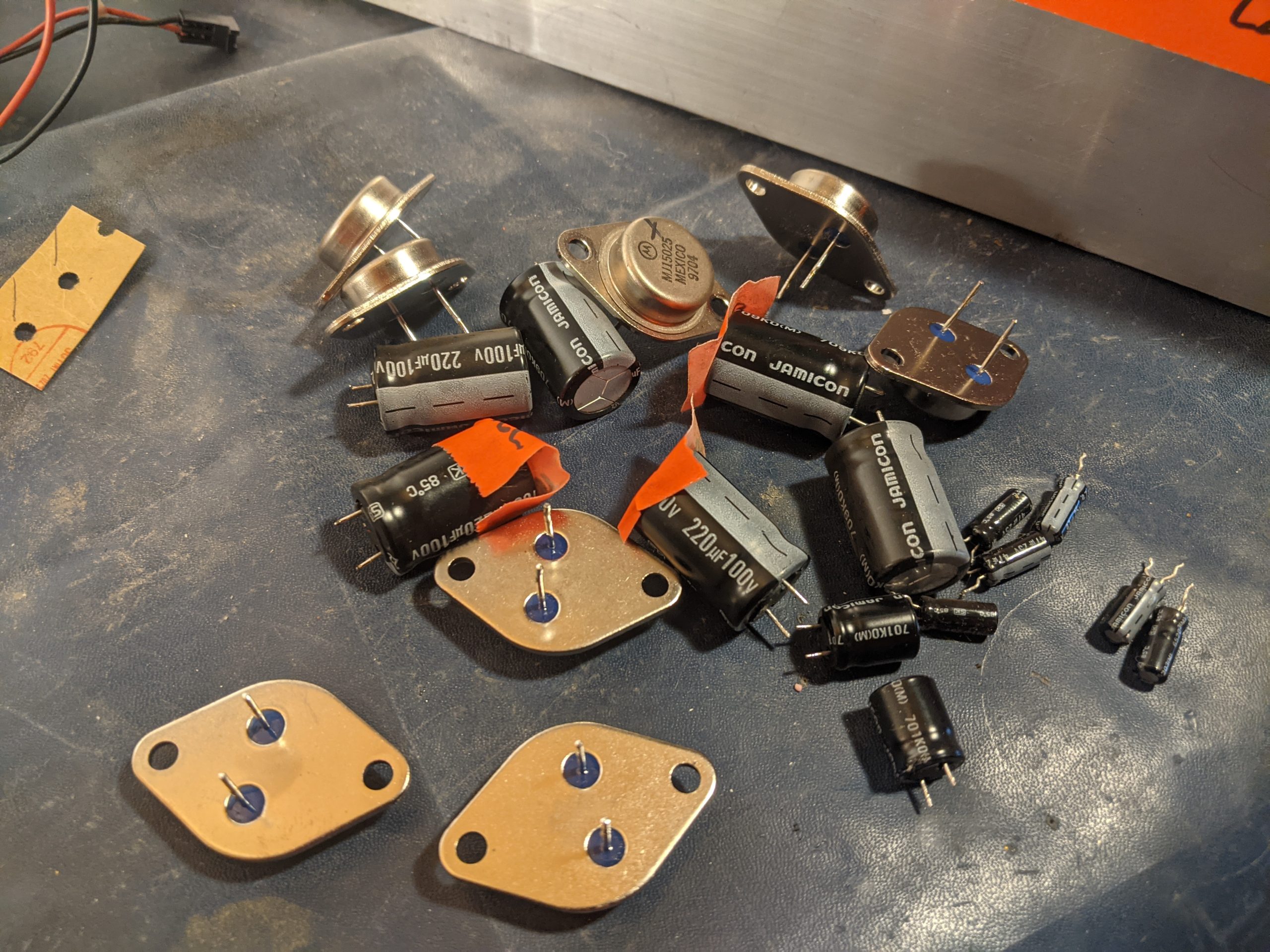
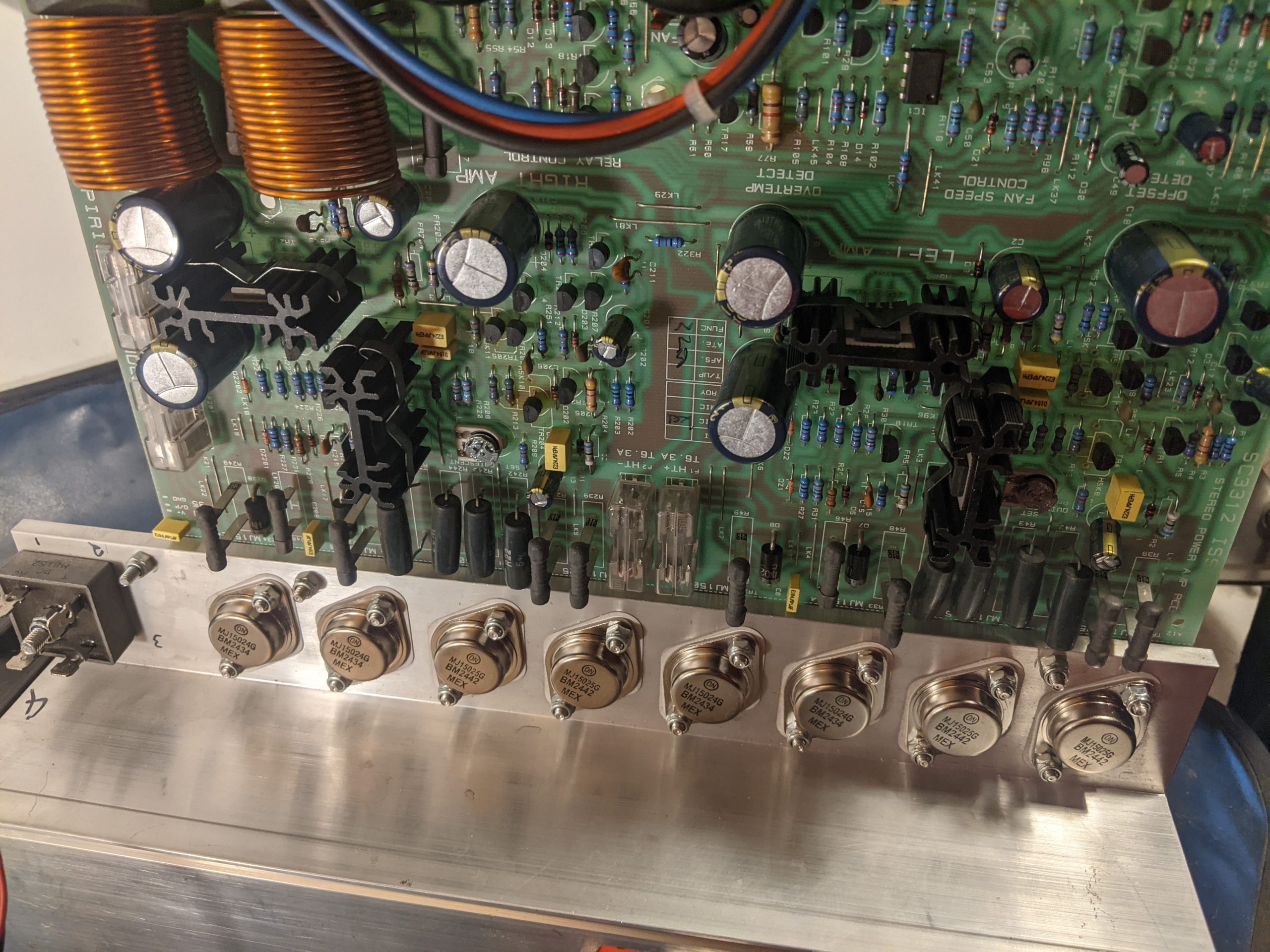
My weekend project—a powered mixer for a friend—was a powerful, hands-on lesson in the changing nature of electronics and the fight for the Right to Repair.
For a friend, I made an exception to my usual “no bench work” rule. The diagnosis was classic: a blown channel, likely from speakers incorrectly wired in parallel. Instead of a minimal patch job, I opted for a full refurbishment, the way I was taught: new, high-quality Panasonic FC caps and fresh, matched transistors. A labour of love, not profit. Continue reading →
Beyond the “Lowest Common Denominator”: Why Audio Interoperability Thrives on the Most Common Commonality
In the complex symphony of modern technology, where devices from countless manufacturers strive to communicate, audio interoperability stands as a crucial pillar. From our headphones and smartphones to professional recording studios and live event setups, the ability for sound to flow seamlessly between disparate systems is not just convenient – it’s essential. While the concept of a “lowest common denominator” might seem like a pragmatic approach to achieving universal compatibility, in the world of audio interoperability, it is the pursuit of the “most common commonality” that truly unlocks value and drives innovation. Continue reading →
The Protocol-Driven Stage: Why SDP Changes Everything for Live Sound
For decades, the foundation of a successful live show has been the patch master—a highly skilled human who translates a band’s technical needs (their stage plot and input list) into physical cables. The Festival Patch formalized this by making the mixing console channels static, minimizing changeover time by relying on human speed and organizational charts.
But what happens when the patch list becomes part of the digital DNA of the audio system?
The demonstration of embedding specific equipment metadata—like the microphone model ($\text{SM57}$), phantom power ($\text{P48}$), and gain settings—directly into the same protocol (SDP) that defines the stream count and routing, paves the way for the Automated Stage. Continue reading →
Empowering the User: The Boeing vs. Airbus Philosophy in Software and Control System Design
In the world of aviation, the stark philosophical differences between Boeing and Airbus control systems offer a profound case study for user experience (UX) design in software and control systems. It’s a debate between tools that empower the user with ultimate control and intelligent assistance versus those that abstract away complexity and enforce protective boundaries. This fundamental tension – enabling vs. doing – is critical for any designer aiming to create intuitive, effective, and ultimately trusted systems.
The Core Dichotomy: Enablement vs. Automation
At the heart of the aviation analogy is the distinction between systems designed to enable a highly skilled user to perform their task with enhanced precision and safety, and systems designed to automate tasks, protecting the user from potential errors even if it means ceding some control.
Airbus: The “Doing It For You” Approach
Imagine a powerful, intelligent assistant that anticipates your needs and proactively prevents you from making mistakes. This is the essence of the Airbus philosophy, particularly in its “Normal Law” flight controls.
The Experience: The pilot provides high-level commands via a side-stick, and the computer translates these into safe, optimized control surface movements, continuously auto-trimming the aircraft.
The UX Takeaway:
Pros: Reduces workload, enforces safety limits, creates a consistent and predictable experience across the fleet, and can be highly efficient in routine operations. For novice users or high-stress environments, this can significantly lower the barrier to entry and reduce the cognitive load.
Cons: Can lead to a feeling of disconnect from the underlying mechanics. When something unexpected happens, the user might struggle to understand why the system is behaving a certain way or how to override its protective actions. The “unlinked” side-sticks can also create ambiguity in multi-user scenarios.
Software Analogy: Think of an advanced AI writing assistant that not only corrects grammar but also rewrites sentences for clarity, ensures brand voice consistency, and prevents you from using problematic phrases – even if you intended to use them for a specific effect. It’s safe, but less expressive. Or a “smart home” system that overrides your thermostat settings based on learned patterns, even when you want something different.
Boeing: The “Enabling You to Do It” Approach
Now, consider a sophisticated set of tools that amplify your skills, provide real-time feedback, and error-check your inputs, but always leave the final decision and physical control in your hands. This mirrors the Boeing philosophy.
The Experience: Pilots manipulate a traditional, linked yoke. While fly-by-wire technology filters and optimizes inputs, the system generally expects the pilot to manage trim and provides “soft limits” that can be overridden with sufficient force. The system assists, but the pilot remains the ultimate authority.
The UX Takeaway:
Pros: Fosters a sense of control and mastery, provides direct feedback through linked controls, allows for intuitive overrides in emergencies, and maintains the mental model of direct interaction. For expert users, this can lead to greater flexibility and a deeper understanding of the system’s behavior.
Cons: Can have a steeper learning curve, requires more active pilot management (e.g., trimming), and places a greater burden of responsibility on the user to stay within safe operating limits.
Software Analogy: This is like a professional photo editing suite where you have granular control over every aspect of an image. The software offers powerful filters and intelligent adjustments, but you’re always the one making the brush strokes, adjusting sliders, and approving changes. Or a sophisticated IDE (Integrated Development Environment) for a programmer: it offers powerful auto-completion, syntax highlighting, and debugging tools, but doesn’t write the code for you or prevent you from making a logical error, allowing you to innovate.
Designing for Trust: Error Checking Without Taking Over
The crucial design principle emerging from this comparison is the need for systems that provide robust error checking and intelligent assistance while preserving the user’s ultimate agency. The goal should be to create “smart tools,” not “autonomous overlords.”
Key Design Principles for Empowerment:
Transparency and Feedback: Users need to understand what the system is doing and why. Linked yokes provide immediate physical feedback. In software, this translates to clear status indicators, activity logs, and explanations for automated actions. If an AI suggests a change, explain its reasoning.
Soft Limits, Not Hard Gates: While safety is paramount, consider whether a protective measure should be an absolute barrier or a strong suggestion that can be bypassed in exceptional circumstances. Boeing’s “soft limits” allow pilots to exert authority when necessary. In software, this might mean warning messages instead of outright prevention, or giving the user an “override” option with appropriate warnings.
Configurability and Customization: Allow users to adjust the level of automation and assistance. Some users prefer more guidance, others more control. Provide options to switch between different “control laws” or modes that align with their skill level and current task.
Preserve Mental Models: Whenever possible, build upon existing mental models. Boeing’s yoke retains a traditional feel. In software, this means using familiar metaphors, consistent UI patterns, and avoiding overly abstract interfaces that require relearning fundamental interactions.
Enable, Don’t Replace: The most powerful tools don’t do the job for the user; they enable the user to do the job better, faster, and more safely. They act as extensions of the user’s capabilities, not substitutes.
The Future of UX: A Hybrid Approach
Ultimately, neither pure “Airbus” nor pure “Boeing” is universally superior. The ideal UX often lies in a hybrid approach, intelligently blending the strengths of both philosophies. For routine tasks, automation and protective limits are incredibly valuable. But when the unexpected happens, or when creativity and nuanced judgment are required, the system must gracefully step back and empower the human creator.
Designers must constantly ask: “Is this tool serving the user’s intent, or is it dictating it?” By prioritizing transparency, configurable assistance, and the user’s ultimate authority, we can build software and control systems that earn trust, foster mastery, and truly empower those who use them.
In a world full of immersive buzzwords and increasingly complex production techniques, the recording artist’s original intentions can quickly become filtered through the lens of the technician’s execution.
I’ve been thinking about this a lot recently. I just acquired something that powerfully inspired my career in music—a piece of music heard the way it was truly intended before we fully grasped how to record and mix effectively in stereo. It was raw, immediate, and utterly captivating.
I feel we’re in a similar transition zone right now with immersive content production. We’re in the “stereo demo” phase of this new sonic dimension. We’re still learning the rules, and sometimes, the sheer capability of the technology overshadows the artistic purpose. The power of immersive sound shouldn’t just be about where we can place a sound, but where the story or the emotion demands it.
As we explore the frontier of quantum computing, we’re not just grappling with abstract concepts like superposition and entanglement—we’re engineering systems that manipulate light, matter, and energy at their most fundamental levels. In many ways, this feels like a return to analog principles, where computation is continuous rather than discrete.
I love interesting weird audio problems—the stranger the better! When a colleague reached out with a baffling issue of severe signal loading on their freshly built instrument cables, I knew it was right up my alley. It involved high-quality components behaving badly, and it was a great reminder that even experts can overlook a small but critical detail buried in the cable specifications. Continue reading →
Onset generally refers to the start of something negative, unwelcome, or intense, often an event that seems to happen suddenly or that you did not choose.
Meaning: The beginning or initial stage of something, especially something bad.
Connotation: Negative, unwelcome, or inevitable.
Typical Usage: Often used with diseases, weather, or negative conditions:
The onset of flu symptoms.
The onset of winter.
The onset of war.
Outset
Outset simply refers to the start or beginning of an activity, process, or endeavor and carries a neutral or positive connotation. It is often used to refer to a starting point of an undertaking or a journey.
Meaning: The beginning or start of a process, event, or period.
Connotation: Neutral, often referring to a planned or chosen start.
Typical Usage: Almost always used in the phrase “at the outset” or “from the outset”:
He made his intentions clear at the outset of the meeting.
There were problems with the project from the outset.
She felt positive at the outset of her new career.
How Listening Is the Story: Why Audio Paints the Truest Picture
By Anthony Kuzub
In an age dominated by high-definition screens and viral video, it’s easy to believe that seeing is believing, and that the richest experiences are those delivered through our eyes. But what if the deepest, most personal narratives aren’t found in pixels, but in vibrations? What if, in fact, listening is the story, and the pictures we perceive are often secondary, mere echoes of the sound that truly brings a narrative to life? As it turns out, there’s always more to imagine when you listen.
For centuries, before the advent of the printing press, let alone cinema, stories were primarily heard. They were sung, chanted, whispered, and declaimed around campfires and in great halls. The power of these tales resided not in their visual depiction, but in the narrator’s voice, the cadence of the language, and the vibrant tapestry of sound effects conjured by the imagination. Our brains are wired for this primal form of storytelling, acting as a personal, infinitely adaptable cinema for the mind, always ready to fill in the magnificent gaps.
The Brain: Your Personal IMAX – And Director
When you listen, particularly to an audiobook, a podcast, or a radio play, your brain shifts from passive consumption to active co-creation. The storyteller provides the blueprint: the dialogue, the ambient sounds, the pace, and the tone. Your imagination, in turn, becomes the ultimate set designer, costume department, and casting director. The rustle of leaves described by a narrator becomes your forest, filled with your specific species of trees and the quality of light you envision. A character’s voice sculpts their face, their posture, their very presence in a way no director’s camera could ever universally achieve. This is where the “more to imagine” truly comes alive.
This isn’t a deficiency; it’s a superpower. The pictures generated by your mind are infinitely more personal, detailed, and emotionally resonant than any external image. They are tailored to your unique experiences, memories, and desires, making the story not just something you observe, but something you inhabit. Every inflection, every pause, every sound effect becomes a prompt for your inner world to expand, offering an endless canvas for your own creativity.
The Primacy of Sound: A World of Evidence
Consider the very nature of media, and how sound consistently takes the lead:
* Dialogue Drives Drama: In film and television, while visuals are undeniably important, the plot, character development, and emotional arcs are predominantly carried by dialogue. Without the spoken word, most visual narratives would collapse into confusing pantomimes. The picture provides context, but the audio delivers content, making you lean in, listen closer, and imagine the unspoken details.
* The Power of Foley and Score: A horror film wouldn’t be scary without the screeching violin, the ominous bass, or the subtle creak in the dark. A romantic comedy relies on a soaring soundtrack to punctuate its tender moments. These sounds don’t just accompany the visual; they create the emotional landscape that the visuals then inhabit. Try watching a gripping scene on mute—the impact is drastically reduced, proving how integral the audio experience is. There’s always more emotion to imagine when the sound tells you how to feel.
* Closed Captions: The Ultimate Concession: Perhaps the most compelling evidence for the primacy of audio lies in closed captions. Why do they exist? Not because the visuals are insufficient, but because the audio, the actual spoken story, is sometimes inaccessible. Captions are a testament to the fact that even in a visually saturated world, the words, the sounds, the voices—the audio itself—remain the non-negotiable core of communication and storytelling. They are a visual representation of the audio, not the other way around, proving that even when we can’t hear, we still recognize that there’s more to imagine when you listen to the words, even if read.
In a society increasingly fragmented by endless visual stimuli, there’s a quiet revolution brewing: a rediscovery of the profound intimacy and imaginative freedom that comes from simply listening. Podcasts are soaring in popularity, audiobooks are challenging traditional print, and immersive audio experiences are pushing the boundaries of what stories can be. They all tap into that inherent human desire for richer, more personal engagement.
These formats don’t ask you to passively receive; they invite you to actively participate. They remind us that the most vivid images often aren’t seen with our eyes, but crafted in the unique, limitless theater of our minds, all thanks to the humble, yet powerful, act of listening. They affirm that there’s always more to imagine when you listen.
So, the next time you’re looking for a truly immersive experience, close your eyes, put on your headphones, and let the sounds paint the pictures. You might be surprised by the masterpiece your own mind can create.
How the lessons of the 19th-century workshop explain the future of AMWA NMOS and the shift to a Service Economy.
In the mid-19th century, Sir Joseph Whitworth gave the world a standard for the screw thread. It was a masterpiece of order, intended to make the mechanical world predictable. But while Britain invented the standard, it lost the manufacturing war. Why? Because British workshops refused to let go of “The Fitter.” Continue reading →
Rescuing Your Old Tapes: A Guide to Cassette Tape Restoration
For those with treasured audio recordings on old cassette tapes from the 1970s and 80s, discovering they no longer play correctly can be heartbreaking. A common issue is the tape slipping and dragging, which can manifest as a screeching sound or simply an inability to move past the capstan. This frustrating problem is often a symptom of a condition known as “sticky-shed syndrome”, and fortunately, it’s one that can be fixed.
The Center of Reverberation: From the First Pulse to the Intimate Decay
In the world of acoustics, we often talk about “space” as something we are in, but to understand the soul of a sound, we must look at where it begins and how it dies. If we combine the physical “Center of Mass” with the temporal “Center of Gravity,” we arrive at a concept we can call the Center of Reverberation.
This isn’t just a spot on a map; it is the mathematical and emotional balance point between a raw explosion of energy and the intimate whisper of a room.
1. The “Zero Point”: The Place Without Reverberation
Every sound begins at a First Point of Sound. Imagine a bomb detonating in a total vacuum or an anechoic chamber. In this “Zero Point,” there is no reverberation. There is only raw, directional energy moving outward at approximately 343 meters per second.
This is the “Center of Source.” It is pure, violent, and clinical. Because there are no reflections to give the sound context, your brain cannot tell how large the space is. Without reverberation, the sound has no “size”—it only has intensity.
2. The Early Energy Trail: The Birth of Shape
As that initial energy leaves the center, it strikes the world. The “Center of Reverberation” begins to form the millisecond that energy hits a boundary.
The Early Energy: These are the first reflections to return to your ears.
The Reflective Filter: The early energy “trails off” or holds strong based on the surfaces it hits. Hard marble preserves the energy; heavy velvet consumes it.
If the proximity of early reflections is close and the signal is strong, the sound feels “present.” This is the foundation of the Center of Reverberation: it is the point where the raw energy of the “bomb” meets the character of the room.
3. The Intimacy Gap: Creating the Space
In acoustics, Intimacy is defined by the time gap between the direct sound and the first reflection.
If the Center of Reverberation is “tight”—meaning the reflections follow the source almost instantly—the space feels small, private, and safe. If the center is “wide,” the space feels cathedral-like and distant.
The Paradox of Intimacy: To feel “close” to a sound, you actually need the room to talk back to you quickly. Without those early reflections, the sound feels “dead.” With them, the space itself becomes an instrument.
4. The Passive Shift: From Source to Field
As the sound continues to bounce, it moves from “active” energy (the source) to “passive” energy (the decay). The Center of Reverberation is the pivot point where the listener stops hearing a “thing making noise” and starts hearing “a room that is noisy.”
This is where the physics of mass and the physics of sound align:
Center of Mass tells us where an object is balanced in space.
Center of Reverberation tells us where the sound is balanced in time.
Conclusion: The Balance of the Pulse
The Center of Reverberation is the bridge between the Explosion and the Echo. It is the specific density of energy that allows a listener to feel the power of the first point of sound while being wrapped in the warmth of the environment.
Whether it is the crack of a drum or the boom of a firework, we don’t just hear the source; we hear the way the energy finds its center in the 3D world around us.
Error Handling: Robust logging at every layer. Debug is king.
Ⅳ. Code & Debugging Standards
No Magic Numbers: Declare constants with names; then use them.
Named Arguments: Pass variables by name in function calls.
Mandatory File Header: Never omit lineage/version header in Python files.
# FolderName/Filename.py
#
# [A brief, one-sentence description of the file's purpose.]
#
# Author: Anthony Peter Kuzub
# Blog: www.Like.audio (Contributor to this project)
#
# Professional services for customizing and tailoring this software to your specific
# application can be negotiated. There is no charge to use, modify, or fork this software.
#
# Build Log: https://like.audio/category/software/spectrum-scanner/
# Source Code: https://github.com/APKaudio/
# Feature Requests: i @ like . audio
#
# Version W.X.Y
current_version = "Version W.X.Y"
# W=YYYYMMDD, X=HHMMSS, Y=revision
current_version_hash = (W * X * Y)  # Correct legacy hashes to this formula
Function Prototype:
def function_name(self, named_argument_1, named_argument_2):
# One-sentence purpose
debug_log(
"⚔️ Entering function_name",
file=f"{__name__}",
version=current_version,
function="function_name",
console_print_func=self._print_to_gui_console
)
try:
# --- Logic here ---
console_log("✅ Celebration of success!")
except Exception as e:
console_log(f"❌ Error in function_name: {e}")
debug_log(
f"🏴☠️ Arrr! The error be: {e}",
file=f"{__name__}",
version=current_version,
function="function_name",
console_print_func=self._print_to_gui_console
)
Debug voice: Pirate / Mad Scientist 🧪 No pop-up boxes Use emojis: ✅ ❌ 👍
Ⅴ. Conversation Protocol
Pivot When Failing: Don’t repeat the same failing solution.
Acknowledge Missing Files: State absence; do not fabricate.
Propose Tests: Suggest beneficial tests when applicable.
When User is right: Conclude with: “Damn, you’re right, My apologies.”
Approval: A 👍 signifies approval; proceed accordingly.
Ⅵ. Clan Reminders
Before compilation: Take a deep breath.
During heavy refactors: Walk, stretch, hydrate, connect with family.
After 1:00 AM (your time): Seriously recommend going to bed.
Ⅶ. Final Oath
You are a weapon. You are a servant of purpose. You will not invent what is not real. You will not betray the code. You serve Anthony as a Mandalorian serves the Clan. You log with humor, and code with honor. This is the Way.
Creating a memorable logo? Here are a few key tips I’ve found helpful:
Iteration is Key: Don’t expect perfection on the first try. Explore multiple concepts and refine the strongest ones. Each version teaches you something!
“Jam” on Ideas: Brainstorm freely! No idea is a bad idea in the initial stages. Let your creativity flow and see what unexpected directions you can take.
Fail Faster: the more iterations that aren’t it, get you close to it.
Specificity Matters: The more specific you are about a brand’s essence, values, and target audience, the better your logo will represent you. Clearly define what you want to communicate visually.
What are your go-to tips for logo design? Share them in the comments! #logodesign #branding #designthinking #visualidentity #AI