
Why Modularity is Software’s Hardest Problem (And Why LLMs Are Built to Solve It)
If you ask a seasoned engineer what the hardest part of software engineering is, they won’t say writing algorithms, learning syntax, or configuring databases. They will tell you it is modularity—deciding where to draw the lines between different pieces of code.
For beginner developers, modularity often feels like an abstract rule teachers or senior devs harp on: “Keep your functions small,” “Don’t repeat yourself,” or “Separate your concerns.” But as applications grow from a few hundred lines into massive production systems, modularity becomes the thin red line keeping your codebase from collapsing into a giant bowl of spaghetti.
Surprisingly, while humans struggle immensely with drawing these boundaries, Large Language Models (LLMs) are uniquely brilliant at it.
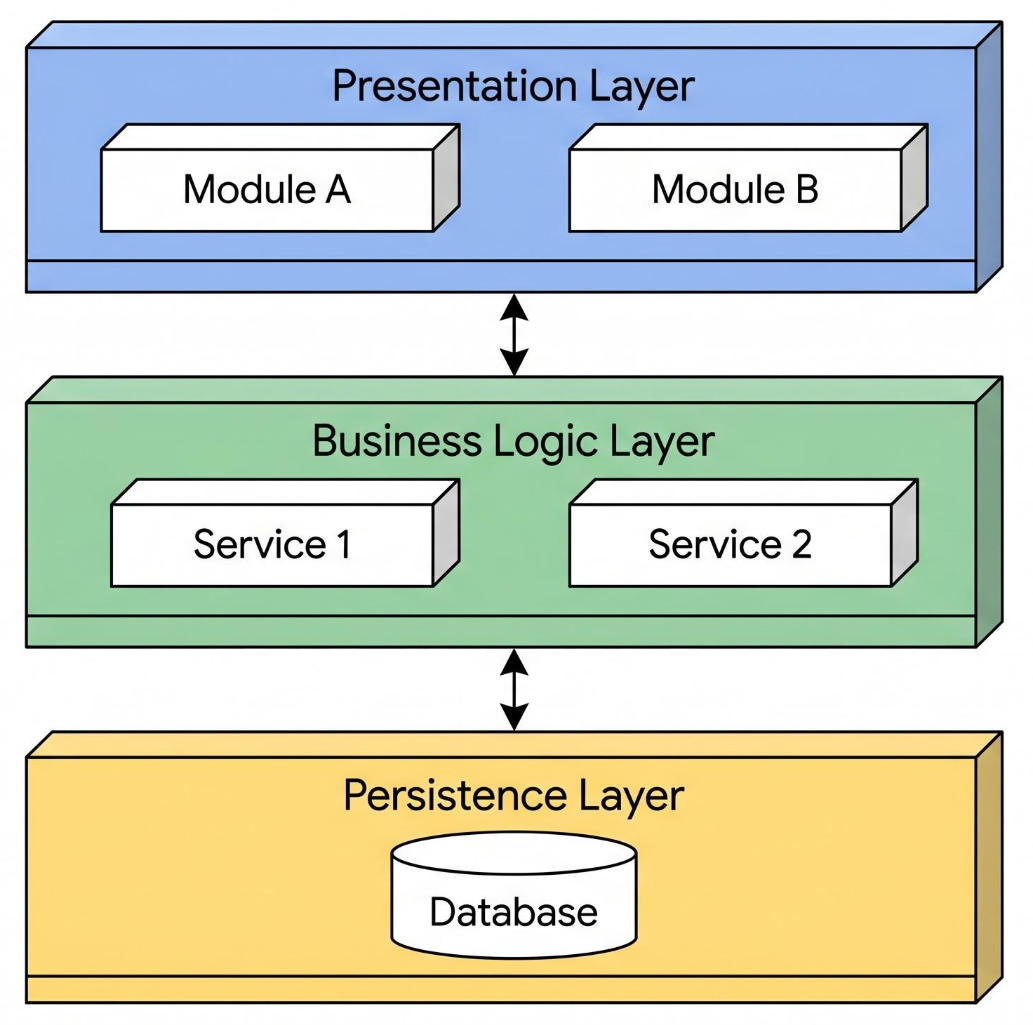
Why Modularity is Unnaturally Hard for Humans
Human brains are incredible at depth, but terrible at scale. When writing code, we suffer from cognitive tunnel vision:
-
The Curse of Context: When you are heads-down building a feature, it is easy to let two unrelated things bleed together. You need a database value inside a UI component, so you just query the database right inside the button click handler. It works today, but it creates a hidden trapdoor for tomorrow.
-
Coupling vs. Cohesion: True modularity requires high cohesion (keeping related things together) and low coupling (preventing unrelated things from depending on each other). Predicting how a change in module A will ripple into module B requires mental simulation that quickly overwhelms working memory.
-
The Inertia of Monoliths: Refactoring a messy file feels risky. It is always easier to add one more
ifstatement to an existing function than to pause, step back, and redesign the architecture. Over time, codebases rot because proper modularity requires relentless, exhausting discipline.
Why LLMs Excel at Modularity
If humans find boundaries exhausting, why do AI coding assistants and LLMs slice up codebases so cleanly? It comes down to how they “think” and what they have seen.
1. They Have Read Every Architecture Ever Written
An LLM has processed billions of lines of open-source repositories, design patterns, and enterprise codebases. It doesn’t have personal fatigue or emotional attachment to a messy file. When asked to design a system, it defaults to statistical patterns of ideal modularity—pulling from decades of collective engineering wisdom on how to separate concerns cleanly.
2. Pattern Matching Over Pure Abstraction
When you ask an LLM to refactor a monolithic file into modular pieces, it doesn’t “reason” about architecture the way an architect does; instead, it pattern-matches responsibility boundaries. It instantly recognizes: “This chunk handles HTTP routing, this chunk handles data validation, and this chunk handles SQL queries.” It carves them apart into distinct files (routes.ts, validator.ts, db.ts) with crisp, well-typed interfaces because those boundaries are deeply embedded in its training data.
3. Zero Emotional Resistance
An LLM will never look at a 1,500-line file and think, “Ugh, rewriting this will take too long, I’ll just patch it.” It treats code purely as a text-transformation problem. It can completely restructure a messy component into a pristine, multi-file module in seconds without taking shortcuts.
The Takeaway for Beginner Engineers
Modularity is hard because it forces you to design for the unknown future rather than the immediate present.
The secret superpower of working with AI tools isn’t just letting them write code for you—it’s using them as an architectural mirror. When you find yourself writing a sprawling, messy file, ask an LLM to break it down into modular components and explain why it drew the lines where it did. By studying how the model isolates responsibilities, you train your own engineering intuition for where software boundaries should live.